

How Much Money Can Podcasters Make? 20 Proven Methods to Make Money
Want to hear something not enough people talk about? It’s this - podcasting takes a lot of time and energy. It’s why it’s not very surprising that when people consider starting a podcast of their own, the first thing many of them ask is, “how much money can podcasters make?”
The answer to that question is unfortunately not very simple. The truth is that podcast creators can make money, but as with all forms of content it’s the few that make the most. With this in mind, let’s explore the secrets of making money with podcasting.
How Many Listeners Do You Need to Make Money on a Podcast?
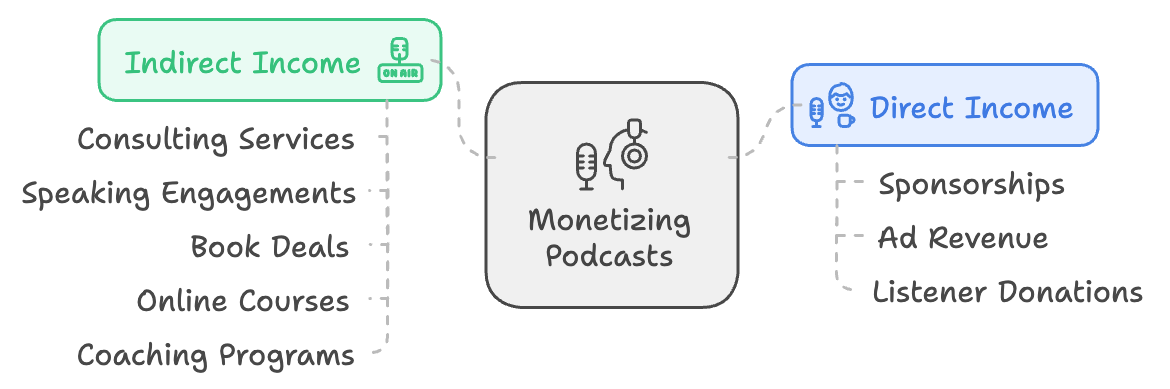
It's a common misconception that you need a large listener base to monetize your audio or video podcast successfully. In reality, even podcasts with fewer than 1,000 downloads a year can potentially generate six-figure revenues. The key lies in understanding and leveraging two types of income streams for podcasters: indirect and direct.
Indirect Income from Podcasting
Indirect income stems from everything related to your audience and other content you create beyond the podcast itself. This can include consulting services, speaking engagements, book deals, online courses, or coaching programs that you offer based on your podcast's subject matter expertise. With indirect income, the size of your podcast audience matters less than the quality of your relationships with listeners and your ability to provide value in other formats.
Direct Income from Podcasting
Direct income, on the other hand, comes from sources directly tied to your podcast, such as sponsorships, ad revenue, and listener donations. While having a larger audience can make it easier to attract sponsors or generate significant ad revenue, it's not the only factor. Niche podcasts with smaller but highly engaged audiences can be very attractive to specialized sponsors willing to pay premium rates to reach a targeted listenership.
No One-Size-Fits-All-Approach to Podcast Monetization
Success stories of podcast hosts who have monetized with varying audience sizes demonstrate that there's no one-size-fits-all approach. Some podcasters with small but dedicated audiences have built thriving businesses around their expertise, while others with larger followings focus more on direct podcast revenue.
The key is to focus on creating high-quality, valuable content that resonates with your target audience, regardless of its size. Build strong relationships with your listeners, understand their needs, and explore both indirect and direct monetization strategies that align with your podcast's goals and audience preferences. Remember, a smaller, highly engaged audience can often be more valuable than a larger, passive one when it comes to monetization opportunities.
How Can You Make Money from a Podcast?
There are several strategies podcast hosts can use to generate income from their episodes.
One popular method is through sponsorships, where brands pay to have their products or services mentioned during the podcast.
Affiliate marketing is another option, where podcasters earn a commission for promoting and selling products or services through unique affiliate links.
Crowdfunding platforms like Patreon allow listeners to support their favorite podcasts through monthly donations in exchange for exclusive content or perks.
Selling branded merchandise such as t-shirts, mugs, or stickers is another way to monetize a podcast while also increasing brand visibility.
When negotiating deals and setting pricing models, it's essential to consider factors such as your audience size, engagement rates, and the value you provide to sponsors. Researching industry standards and understanding your unique selling points can help you secure fair deals that benefit both you and your partners.
How Do Podcasts Make Money Directly?
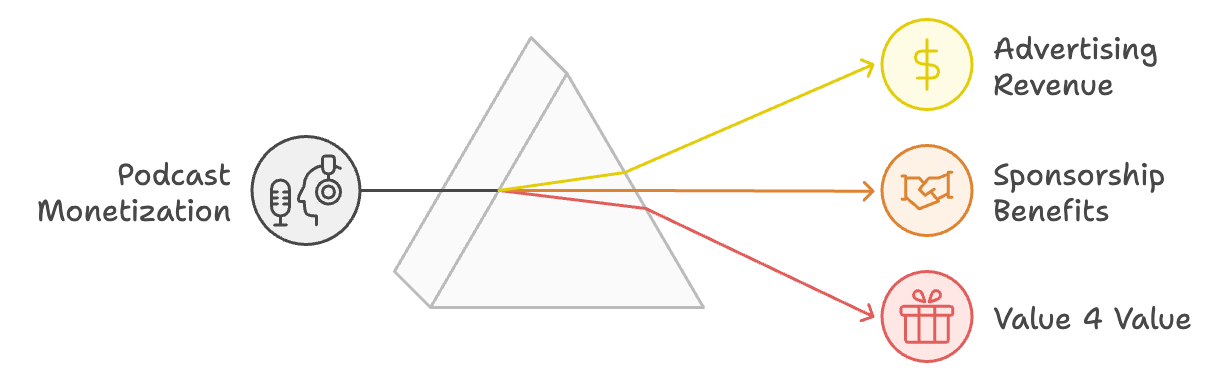
Focusing strictly on direct revenue from podcasting, there are three primary ways podcasts can generate income: advertising, sponsorships, and Value 4 Value. Each of these methods offers unique benefits and challenges for podcasters looking to monetize their content.
Podcast Advertising
Advertising plays a significant role in generating podcast income. There are two common pricing models for advertisers:
- CPM (Cost Per Thousand): Advertisers pay a set amount per 1,000 downloads or listens.
- CPP (Cost Per Play): Advertisers pay for each individual download or listen.
Podcast ads can be placed at different points in an episode:
- Pre-roll: Before the main content
- Mid-roll: In the middle of the episode
- Post-roll: After the main content
Pre-roll and mid-roll ads typically have higher engagement rates and command higher prices, as listeners are more likely to be actively tuned in. Post-roll ads, while less expensive, may be less effective as some listeners may drop off before hearing them.
Working with an advertising network can streamline the process of securing sponsors and managing ad campaigns. These networks act as intermediaries between podcasters and advertisers, handling everything from ad sales to performance tracking.
While they take a percentage of ad revenue as commission, advertising networks have established relationships with advertisers and automated trafficking systems can help podcasters maximize their earning potential without having to manage individual advertiser relationships directly.
Podcast Sponsorships
Sponsorships differ from traditional advertising in that they often involve a deeper, more integrated relationship between the podcast and the sponsor. Sponsorships can take various forms:
- Title sponsor: The sponsor's name is included in the podcast title
- Presenting sponsor: The sponsor is prominently mentioned at the beginning of each episode
- Segment sponsor: The sponsor is associated with a specific segment of the podcast episodes
Sponsorships often involve more personalized endorsements from the host and may include additional promotional activities beyond the podcast itself. These partnerships can be more lucrative than standard advertising deals and may provide more stable, long-term income for podcasters.
In some cases, a sponsor may even pay to participate in one or many episodes, or segments of episodes. For example, you might have a sponsor pay you to interview their CEO on your podcast or spend an episode or two talking about their products or services.
There are many different options for how a sponsor might choose to partner with your podcast.
Value 4 Value (V4V)
Value 4 Value is an audience-based model that allows listeners to directly support podcasts they enjoy. Key aspects of V4V include:
- Voluntary payments: Listeners pay what they believe the podcast content is worth to them
- Bitcoin and Lightning Network: Often utilizes cryptocurrency for easy, low-fee micropayments
- Streaming payments: Some implementations allow listeners to automatically send small amounts as they listen
- Specialized apps: Podcast apps like Breez and Fountain support V4V payments
- Boost messages: Listeners can send feedback along with their payments
- Flexibility: Accommodates a range of contribution levels, from very small to larger amounts
V4V fosters a direct relationship between podcast hosts and their subscribers, potentially reducing reliance on advertising and sponsorships. It can create a stronger sense of community and allow podcasters to focus more on creating value for their listeners rather than catering to advertisers.
Each of these monetization methods has its own advantages and can be used individually or in combination, depending on the podcast's audience, content, and overall strategy. When you diversify income streams, you may be able to create a more sustainable and profitable business model.
A Closer Look at Indirect Revenue in Podcasting - 20 Ways to Cash in and Make Money as a Podcaster

While direct revenue sources like advertising and sponsorships are often the focus of podcast monetization discussions, indirect revenue streams can be equally, if not more, lucrative for podcasters. These indirect methods leverage the podcast's entire audience (their show, website, social media, email list, etc…), the creator's expertise, and the show's brand to generate podcast income through related products, services, and opportunities.
Here's 20 ways podcasters can make money indirectly from their show:
1. Consulting and 1:1 coaching: Offering expert advice in the podcast's niche to individuals or businesses.
2. Speaking engagements: Securing paid speaking opportunities at conferences, events, or corporate gatherings.
3. Book deals: Writing and publishing books related to the podcast's topic or the creator's expertise.
4. Online courses: Creating and selling educational content based on the podcast's subject matter.
5. Workshops and seminars: Hosting in-person or virtual learning events for listeners.
6. Merchandise: Selling branded products like t-shirts, mugs, or other items related to the podcast.
7. Affiliate marketing: Promoting products or services and earning commissions on sales generated through unique links.
8. Premium content: Offering exclusive episodes, bonus content, or early access for a fee.
9. Live events: Organizing and selling tickets to podcast-related events, meet-ups, or performances.
10. Software or apps: Developing and selling tools related to the podcast's niche.
11. Crowdfunding campaigns: Launching special projects funded by listeners through platforms like Kickstarter and Patreon.
12. Digital products: Creating and selling ebooks, templates, or guides related to the podcast's topic.
13. Membership sites: Offering exclusive online communities or resources for paying subscribers.
14. Licensing content: Allowing other media outlets to use or repurpose podcast content for a fee.
15. Sponsored content creation: Producing sponsored content for brands in other formats (e.g., blog posts, videos).
16. Group coaching programs: Developing long-term, intensive coaching or mentoring programs for listeners.
17. Mastermind groups: Facilitating paid mastermind groups for listeners in similar industries or with similar goals.
18. Subscription newsletters: Creating paid email newsletters that expand on podcast topics.
19. Webinars: Hosting paid online seminars or workshops on specific topics from the podcast.
20. Partnerships: Collaborating with other businesses or creators on joint ventures or product launches.
These methods often allow for higher earning potential and can help podcasters leverage their expertise and audience relationships in ways that go beyond the limitations of direct podcast monetization. This list is proof that it’s not all about your downloads. It’s about your library of content and your entire audience including and beyond your podcast.
So, How Much Do Podcasters Make?

The potential earnings for podcast creators vary greatly depending on factors such as audience size, monetization strategies, and the popularity of the show's niche. On average, podcasters can expect to earn between $25 to $50 per 1,000 downloads per episode. However, the top-earning podcasts make much more.
For example, Joe Rogan, host of the immensely popular podcast "The Joe Rogan Experience," reportedly earns around $100,000 per episode from his latest deal with Spotify and has an estimated annual income of $60-65 million. Other well-known podcast creators like Karen Kilgariff and Georgia Hardstark of "My Favorite Murder" earn around $15 million annually, while Dave Ramsey of "The Dave Ramsey Show" makes approximately $10 million per year.
It's important to note that these figures represent some of the most successful podcasters and are not necessarily reflective of the average podcaster's earnings. Many podcasts make more modest amounts, ranging from a few hundred to a few thousand dollars per month. In fact, Jack Rhysider says 99% of podcasters won’t make any money podcasting.
Can You Make Money from a Podcast?
The short answer is yes, you can make money from a podcast - directly or indirectly. However, the amount you can earn depends on various factors, including the quality of your podcast episodes, the size and engagement of your audience, and the effectiveness of your monetization strategies.
Podcasters who have successfully monetized their shows often have a clear understanding of their target audience, consistently produce high-quality content, and have built strong relationships with their listeners. They also actively seek out monetization opportunities and are willing to experiment with different strategies to find what works best for their podcast.
On the other hand, podcasters who struggle to monetize their shows may have issues with inconsistent content quality, lack of audience engagement, or difficulty securing sponsorships or other partnerships.
To maximize your chances of earning money from your podcast, focus on creating valuable content for your target audience, consistently promote your show to grow your listenership, and be proactive in exploring various monetization strategies. Building a successful and profitable podcast takes time, effort, and perseverance, but with dedication and the right approach, it is possible to turn your passion for podcasting into a viable income stream.
Are you a podcaster using Castmagic for show notes? Did you know you could make money as an affiliate for Castmagic? Read our affiliate terms, and then click here to sign up for the program.
More blogs like this

Podcast Marketing Strategies: Proven Tips for 2026
The world of podcasting has exploded, with millions of active podcasts vying for attention in 2026. But here's the thing: creating exceptional podcast content is only half the battle. Without effective podcast marketing strategies, even the most compelling shows struggle to reach listeners who need to hear them. We're here to change that narrative for podcasters everywhere.
Fireflies.ai Pricing (2026): Free Plan, Pro vs Business, and Is It Worth It?
Fireflies.ai pricing explained: what the free plan really includes, what Pro, Business and Enterprise cost per seat monthly vs annually, the storage caps that catch people out, and whether it's worth it.

How to Make a Slideshow on TikTok: Step-by-Step Guide
While TikTok built its reputation on short-form videos, the platform's slideshow feature has opened up entirely new creative possibilities. These photo montages, set to music and enhanced with effects, are easier to create than traditional TikTok video content and often generate higher engagement rates.Plus, you don't need fancy video equipment or editing skills. All you need are some great photos and a few minutes to bring them to life.

How to Use AI for Small Business Marketing: Make More Money
Because of AI programs, it’s easier than ever to level up your business. Whether you want to increase your output of blog posts, ramp up your social media efforts, or finally launch your email newsletter, AI software is giving you the shortcut to getting more things done in less time. Want in on this? Keep reading because in this post we’re breaking down how to use AI for small business marketing so you can make more money for your efforts.

How to Become a Content Creator: a Step-By-Step Guide
If you've been wondering how to become a content creator but don't know where to start, you're in the right place. Whether you're dreaming of becoming the next YouTube sensation with a personal brand, growing your Instagram followers, building a TikTok channel, or becoming a social media influencer, this guide could help you turn those content creation dreams into reality.

Best SEO Tools: Which Is the Best SEO Tools for Website Rankings
Agencies managing multiple clients spend a large percentage of their time simply compiling reports and analyzing data across disconnected platforms. This reality underscores why selecting the best SEO software for agencies is so critical for survival in the world of digital marketing.
5 Best Fireflies.ai Alternatives in 2026 (Free and Paid)
Looking for a Fireflies.ai alternative? Here are the 5 best, sorted by the job you need done: free live meeting notes, an individual note-taker, turning recordings into content, or editing the recording.

Best Marketing Tools for Small Businesses in 2026
We've seen countless small businesses transform their marketing efforts simply by choosing smart, efficient solutions that work for their specific needs. The truth is, with the best marketing tools for small business success, you can automate repetitive tasks, reach more customers, and finally get that marketing strategy off your never-ending to-do list.
Riverside Pricing (2026): Free Plan, Pro vs Grow, and Is It Worth It?
Riverside pricing explained: what the free plan includes, what Pro, Grow, Webinar and Business cost monthly vs annually, the recording-hour limits, and whether it's worth it.