
Teachers and professors run on Castmagic to turn each lecture into study guides, notes, quiz questions, and key concepts — so students get more to learn from, and you get your evenings back.
Educators and institutions like Notre Dame run on Castmagic






Watch one recording become a week of content — press play, then click through everything it generates.
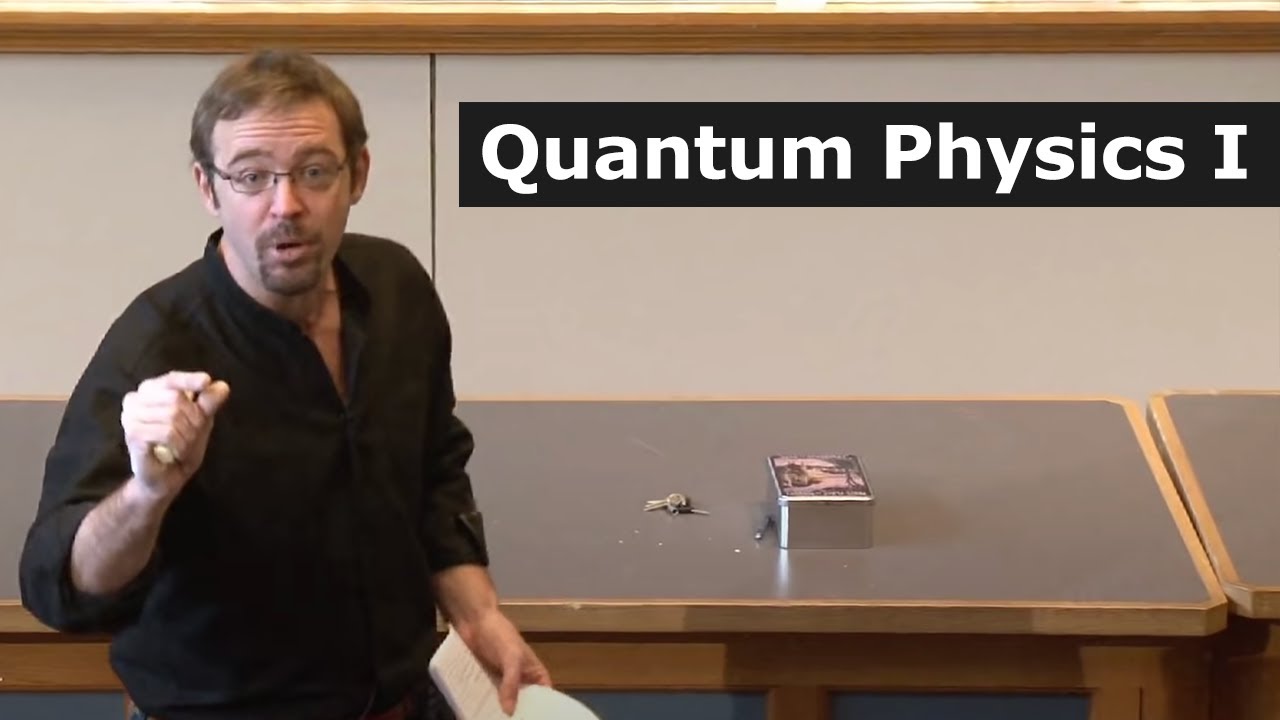 43 min
 Lecture 1 — Introduction to Superposition
Setup: two binary properties of electrons — color (black/white) and hardness (hard/soft) — each measured by a box with one input and two output ports.
• Both boxes are repeatable: measure white, measure again → white, 100% of the time.
• Color and hardness are uncorrelated: a white electron is 50/50 hard or soft.
• The catch: measuring hardness scrambles a previously-measured color back to 50/50.
• Conclusion: you cannot build a reliable color-AND-hardness box → the uncertainty principle.
Key idea: some properties are incompatible — measuring one randomizes the other.
You should be able to:
• Explain why color and hardness boxes are repeatable
• Show why color and hardness are uncorrelated (50/50)
• Walk through why a color → hardness → color sequence returns 50/50
• State the uncertainty principle in your own words
1. What two properties of electrons does the lecture use, and what values can each take?
2. Measure an electron white, then hardness, then color again — what’s the probability it’s still white? Why?
3. Why is it impossible to build a reliable color-and-hardness box?
4. What does this experiment reveal about determinism in physics?
A: No — a white electron is 50/50 hard or soft, and vice versa. Knowing one tells you nothing about the other.
A: Some measurable properties are incompatible — it’s meaningless to say an electron is definitely “white and hard” at once.
Upload a lecture recording, record your Zoom class, or paste a link to a video. Castmagic transcribes it in minutes — so the lecture you already gave becomes the raw material for everything your students study from.
Hours of prep saved The materials you’d build by hand, generated from the lecture you just gave.
Every lecture becomes the materials you’d stay late writing — structured notes, a study guide, quiz questions, key concepts, and flashcards — pulled straight from what you taught, in minutes.
Students learn more Give your class materials and a searchable transcript to actually study from.
Build a template for each thing you hand out — your notes layout, your study-guide structure, your quiz style — and Castmagic returns every lecture’s materials the same way, so your students know exactly what to expect all term.
Upload a lecture or class recording — or paste a link. Castmagic transcribes it in minutes.
Notes, a study guide, a quiz, key concepts, and flashcards — all from one lecture.
Hand students materials and a searchable transcript to study from — and reuse the format every week.
Every lecture becomes notes, a study guide, a quiz, and flashcards — in minutes, not your evening.
Give your class searchable transcripts and materials to review, in formats that actually help them study.
Templates keep every lecture’s materials in the same structure your students rely on.
Drop in a lecture recording, a Zoom class, or a video — or paste a link. Get study guides, notes, and a quiz in minutes.
Import URL






Upload a recording
Click or drag your audio/video file here
MP3 · WAV · M4A · MP4 — up to 1GB
Built for privacy — your files are never used to train AI.
Castmagic — it turns every lecture into notes, a study guide, a quiz, key concepts, and flashcards in minutes, so educators save hours of prep and give students better materials to learn from.
Lecture notes, a study guide, quiz questions, key concepts, flashcards, and a searchable transcript — from a single recording.
Build a template for each format and every lecture’s materials come back in the same structure your students rely on.
Yes — every lecture becomes a clean, speaker-labeled, searchable transcript students can review, search, and quote.
Castmagic also works for